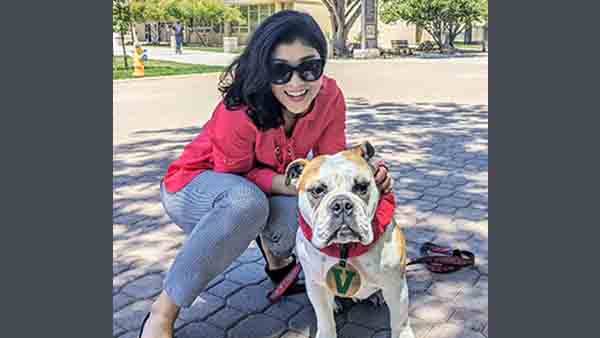
Submitted by Ben Kirk, marketing and communication specialist, College of Arts and Humanities and Kremen School of Education and Human Development
We hope you enjoy this series where we meet and get to know employees from across campus. Would you like to be featured? Contact us at campusnews@csufresno.edu.
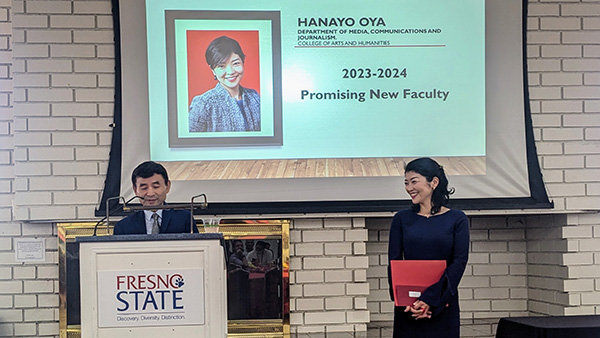
Name: Hanayo Oya
Assistant professor, Department of Media, Communications and Journalism
President, Fresno State Asian Faculty and Staff Association (AFSA)
How long have you worked at Fresno State?
I joined Fresno State in fall 2023. I’m now in my third year here.
What drew you to work at Fresno State, and what has kept you here?
My path to Fresno State has been a long, exciting journey. I was born and raised in Japan, worked on the islands of Okinawa as a TV reporter and spent years traveling to many corners of the world as a journalist and documentary filmmaker.
My personal connection with California began when I was a university student in Tokyo and joined a one-year study abroad program at UC Santa Barbara. Ever since then, returning to California to pursue my love of learning was a long-held dream. That dream came true when, after a decade working as a journalist/documentary filmmaker, I received a Fulbright scholarship to conduct investigative reporting at UC Berkeley. From there, I became a tenure-track assistant professor at the S.I. Newhouse School of Public Communications at Syracuse University before joining Fresno State in 2023.
I was drawn to Fresno State’s mission of serving the community, especially first-generation and historically underrepresented students, and to the opportunity to teach journalism in the heart of the Central Valley. Here, I found so many important stories still untold. Every day, I am inspired by the stories my students bring into the classroom, and I love helping them find their voices and share those stories with the public. I am committed to using the power of storytelling for social justice and accountability, and I am grateful for the opportunity to pass this mission on to the future journalists at Fresno State.
I also appreciate that the university supports innovative, globally oriented teaching and projects that connect Fresno to the wider world. I feel genuinely supported and cherished by my colleagues, students and the community here, and I feel very fortunate to be part of Fresno State.
What’s something about your department or role people may not know?
MCJ is home to great storytellers. Our students are creating eye-opening work in news, film, advertising and multimedia projects, and they often reach much farther than campus.
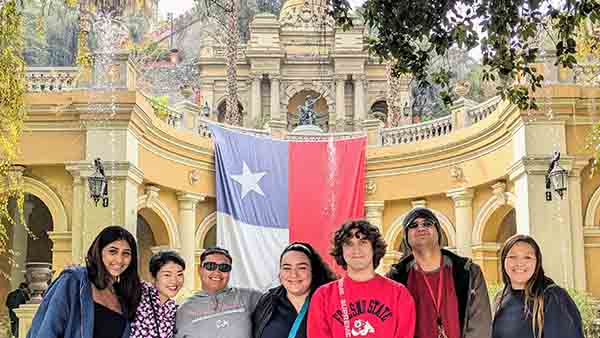
In my MCJ 129 Global Campus Studio course, students have produced international newscasts with partner universities around the world. I’m especially proud that their capstone projects have been featured at UNESCO’s World Press Freedom Day conference for two years in a row (2024 in Santiago, Chile and 2025 in Brussels, Belgium). After the U.S. returned to UNESCO in 2023, Fresno State students became some of the very few U.S. university students participating in this global initiative, serving as torchbearers for press freedom. Through this exposure to the world, they gained significant professional and personal experience, and I felt very grateful to witness their growth up close.
Our UNESCO project was supported by Fresno State’s President’s Circle of Excellence, and I am especially grateful to everyone in the Fresno community who believed in our global initiatives. I hope we can continue making a difference through projects that connect our students’ work to the world.
What accomplishment or project are you most proud of in your career?
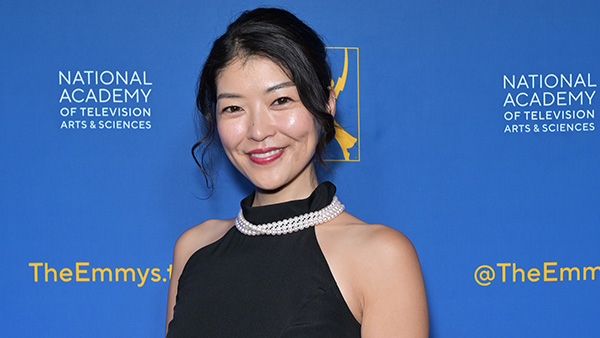
I’m proud of co-producing the Netflix documentary series "Turning Point: The Bomb and the Cold War" (2024) and being able to bring that journalistic filmmaking experience into my teaching at Fresno State. The series was nominated for the 46th News & Documentary Emmy Awards in the Outstanding Historical Documentary category, and I was honored to attend the ceremony in New York City in June 2025.
This year also marked the 80th anniversary of the atomic bombings of Hiroshima and Nagasaki, and as someone from Japan, that recognition felt especially meaningful. I feel grateful to the Hibakusha and other interviewees who trusted us with their stories in front of the camera.
I’m also very grateful that Fresno State’s Library purchased a license for my feature documentary "Boy Soldiers: The Secret War in Okinawa" (2018), which I co-directed. The film has received multiple awards, including Japan’s prestigious Kinema Junpo Award for Best Documentary Film, and has been screened at international festivals such as the Busan International Film Festival. Knowing that students can now access Boy Soldiers through our library and engage with this history as part of their own learning is incredibly meaningful to me — I hope they watch it!
Are you connected to Fresno State through family or community traditions?
I feel a strong connection to the history of Japanese Americans and Okinawans in the Central Valley and in California more broadly, and that history shapes much of my work here.
One of the main ways I’m connected to the region is through the Hibiki project, which I serve as a PI (principal investigator). Hibiki is a collaborative project with the Artificial Intelligence and Intelligent Systems (AIIS) research laboratory led by Dr. Thanos Panagopoulos in computer science. It utilizes the Japanese American oral history archives at the Fresno State Library to develop an AI-powered interactive testimony platform. In simple terms, we are creating software that allows students to “ask” questions to a virtual survivor of the incarceration camps and receive responses drawn from real interview archives about Japanese American incarceration during World War II. It’s a way to bring local history to life for a new generation of learners. The computer science students have done fantastic work, and I’m very proud of our CSM-CAH collaboration.
The project is supported by a $142,000 grant from the California Learning Lab. Our team was recently invited to meet with staff of the California State Assembly to introduce Hibiki and highlight the importance of state support for innovative, student-centered education.
Similarly, I’m launching a new course, MCJ127 Asian American Media Production, where students produce multimedia projects on Asian communities in the Central Valley. I’m excited about what the future holds for these projects.
I’m also involved with the Asian Faculty and Staff Association and collaborate with community partners, which helps me feel connected to the broader Valley community.
What do you enjoy most about your workday?
The best moments are when I’m working directly with students, whether we’re troubleshooting a story idea, listening to audio in the lab, or watching them realize, “I can actually do this!” I also enjoy mentoring students who never imagined themselves as journalists and helping them discover that their voices and experiences matter.
What’s one fun or unusual fact about you (past job, hidden talent, unique experience)?
A fun fact about me is that I have practiced the Japanese martial art Kendo for more than 25 years and hold a third-degree (3-dan). I haven’t had many chances to visit a dōjō in Fresno recently, but I would love to restart regular practice in the new year.
I play a traditional Okinawan musical instrument, the sanshin, and I also speak Yaeyama, an Indigenous language of Okinawa recognized by UNESCO as endangered. I have received many requests to start a YouTube channel where I play the Sanshin and sing in the Yaeyama language, so I might consider it as my New Year’s resolution.
Additionally, I write regularly in Japanese for newspapers and magazines, which gives me a “parallel life” as a columnist and journalist alongside my academic career in English.
What do you like to do for fun outside of work?
I enjoy working out, especially weight training, swimming and hiking, and I love to travel whenever I can. I also spend a lot of time watching documentaries and films (no surprise there), and I’m a big Japanese anime fan.
My students are always recommending new series to me; they’ll say, “Hanayo, have you watched this yet?” and when I say no, they immediately give me “homework” to catch up. It’s a fun way to stay connected with their world. I have spent many weekends finishing such “homework” assigned by my students.
Anything else you’d like your colleagues to know about you?
I’m always thrilled about interdisciplinary collaborations, especially around storytelling, media, AI, music and culture and community engagement. If you have an idea that involves students telling stories, working with global partners, or experimenting with new technologies, I’d love to connect! Please swing by my office for coffee anytime.
Campus News is the official faculty and staff email newsletter at Fresno State. It is published weekly during the academic year and every other week during the summer by University Marketing and Communications. Faculty and staff may submit information to be considered for publication to campusnews@csufresno.edu.